RPACT

Presentation for Allucent

Gernot Wassmer and Friedrich Pahlke

RPACT GbR

October 29, 2024

RPACT / rpact

RPACT is a company which offers

  • enterprise R/Shiny software development services
  • consultancy and user training for clinical researchers using R
  • technical support for the R package rpact

\(\rightarrow\) www.rpact.com

rpact

  • Comprehensive validated R package
  • Design, simulation, and analysis of confirmatory adaptive group sequential designs
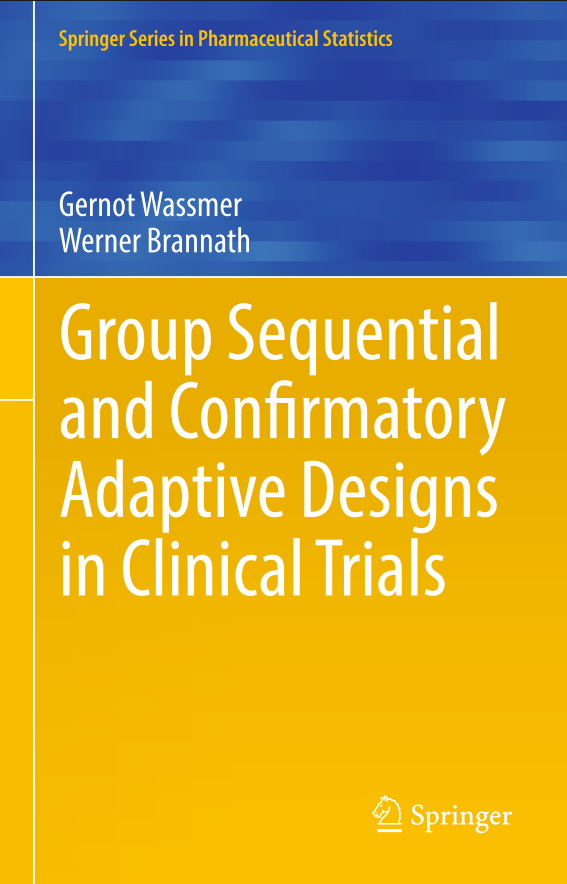
  • Monograph by Wassmer and Brannath, Springer, 2016

\(\rightarrow\) www.rpact.org
Company RPACT in Figures

Founded in May 2017 by Gernot Wassmer and Friedrich Pahlke

  • Idea: open source development with help of “crowd funding”
  • Currently supported by 21 companies
  • \(>\) 80 presentations and training courses since 2018, e.g., FDA in March 2022
  • 29 vignettes based on Quarto and published on rpact.org/vignettes
  • 28 releases on CRAN since 2018
  • August 2024: New joint venture RCONIS1 (Daniel Sabanés Bové, Carrie Li)

The RPACT User Group

  • Boehringer Ingelheim
  • Metronomia Clinical Research
  • F. Hoffmann-La Roche
  • Excelya
  • Dr. Willmar Schwabe
  • Bayer
  • Merck
  • AbbVie
  • Dr. Falk Pharma
  • Klifo
  • FGK Clinical Research
  • UCB
  • GKM
  • Parexel
  • Nestlé
  • Janssen (Johnson & Johnson)
  • Novartis
  • PPD (Thermo Fisher Scientific)
  • Sanofi
  • Pfizer
  • Gilead

The R Package rpact – Functional Range

Trial Designs

  • Fixed sample design
  • Group sequential designs
  • Adaptive designs using the inverse normal and Fisher’s combination test, and conditional error rate principle

Easy to understand R commands:

getDesignGroupSequential()
getDesignInverseNormal()
getDesignFisher()
getDesignConditionalDunnett()

Sample Size and Power Calculation

for

  • testing means (continuous endpoint)
  • testing rates (binary endpoint)
  • survival trials with flexible recruitment and survival time options
  • testing rates for count data

Easy to understand R commands:

getSampleSize[Means/Rates/Survival/Counts]()
getPower[Means/Rates/Survival/Counts]()

Example:

getSampleSizeMeans()
getPowerMeans()

Adaptive Analysis

for testing means, rates, and survival data

  • Calculates adjusted point estimates and confidence intervals
  • Some highlights:
    • Automatic boundary recalculations during the trial for analysis with alpha spending approach, including under- and over-running
    • Adaptive analysis tools for multi-arm trials
    • Adaptive analysis tools for enrichment design

Easy to understand R commands:

getStageResults()
getRepeatedConfidenceIntervals()
getAnalysisResults()

Simulation Tool

for means, rates, and survival data

  • Assessment of adaptive sample size/event number recalculation strategies
  • Assessment of treatment selection strategies in multi-arm trials
  • Assessment of population selection strategies in enrichment designs

Easy to understand R commands:

getSimulation[MultiArm/Enrichment][Means/Rates/Survival/Counts]()

Example:

getSimulationMeans()
getSimulationMultiArmMeans()
getSimulationEnrichmentMeans()

\(\rightarrow\) rpact useful for conducting flexible simulations in clinical trial planning

The R Package rpact

Further information, installation, and usage:

RPACT Cloud

RPACT Cloud – Introduction

  • Graphical user interface
  • Web based usage without local installation on nearly any device
  • Provides an easy entry to rpact
  • Starting point for your R Markdown or Quarto reports
  • Helpful to learn/demonstrate the usage of rpact in a user friendly and intuitive way
  • Online available at cloud.rpact.com

RPACT Cloud – Start Page

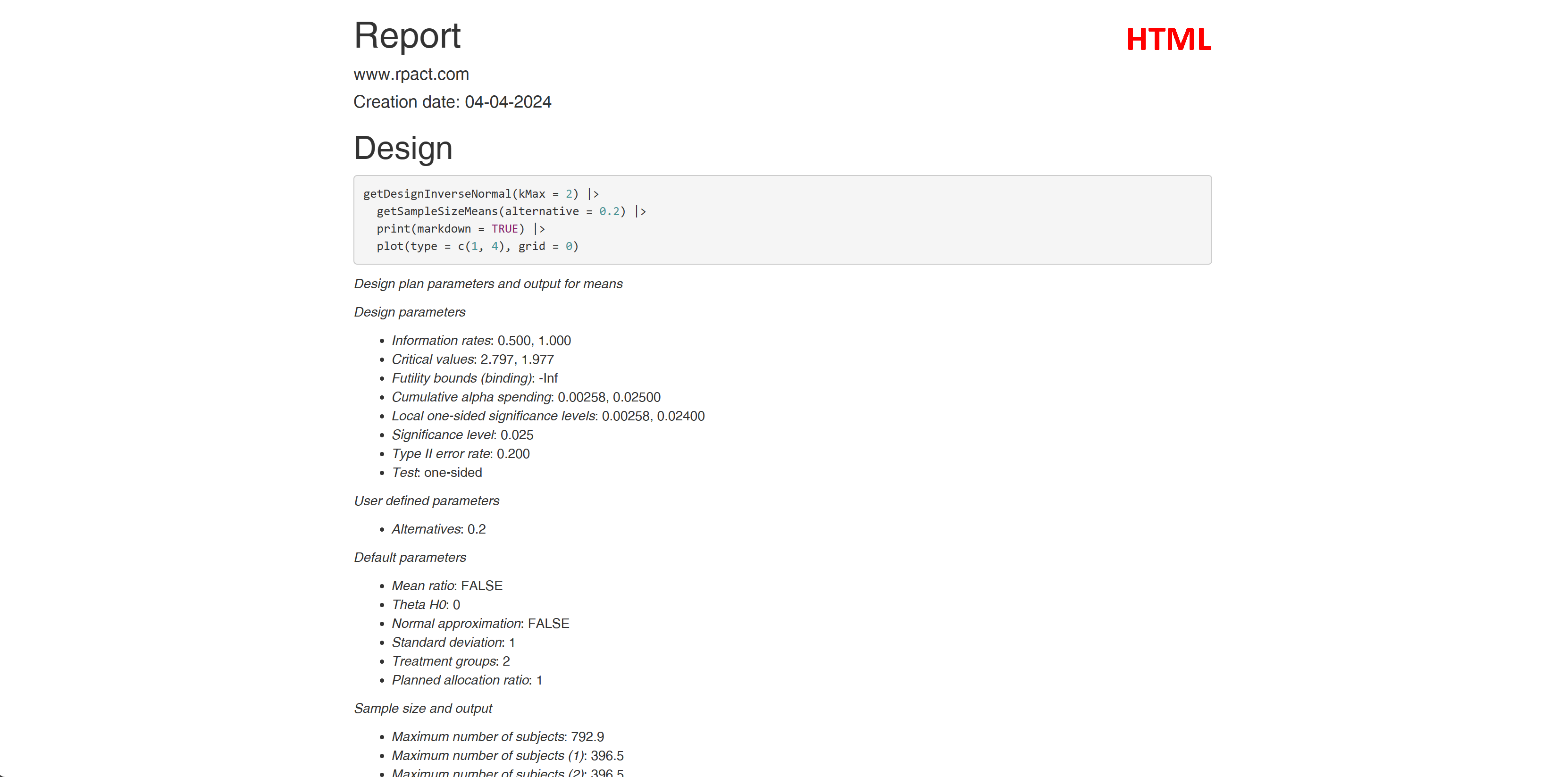
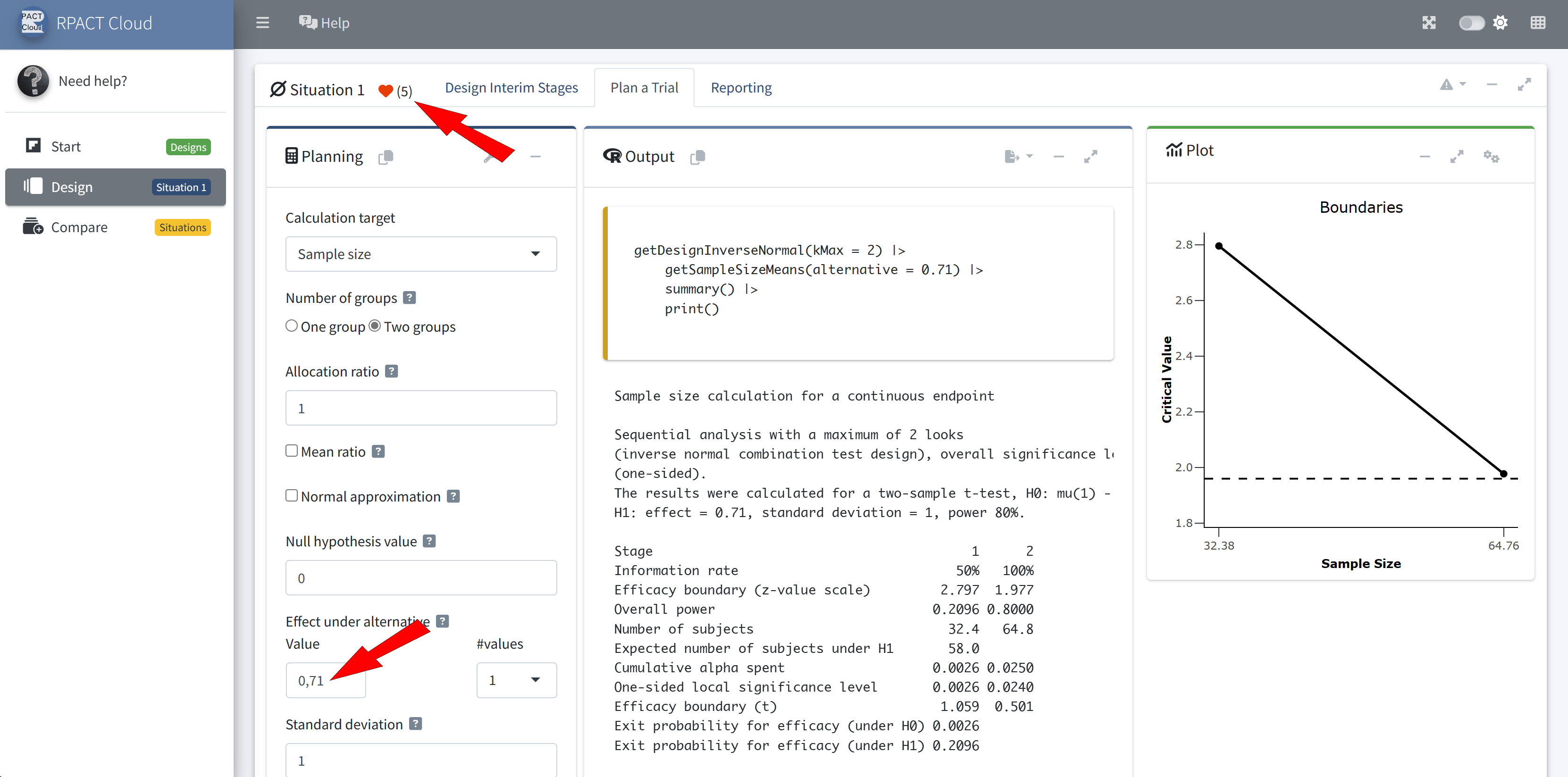
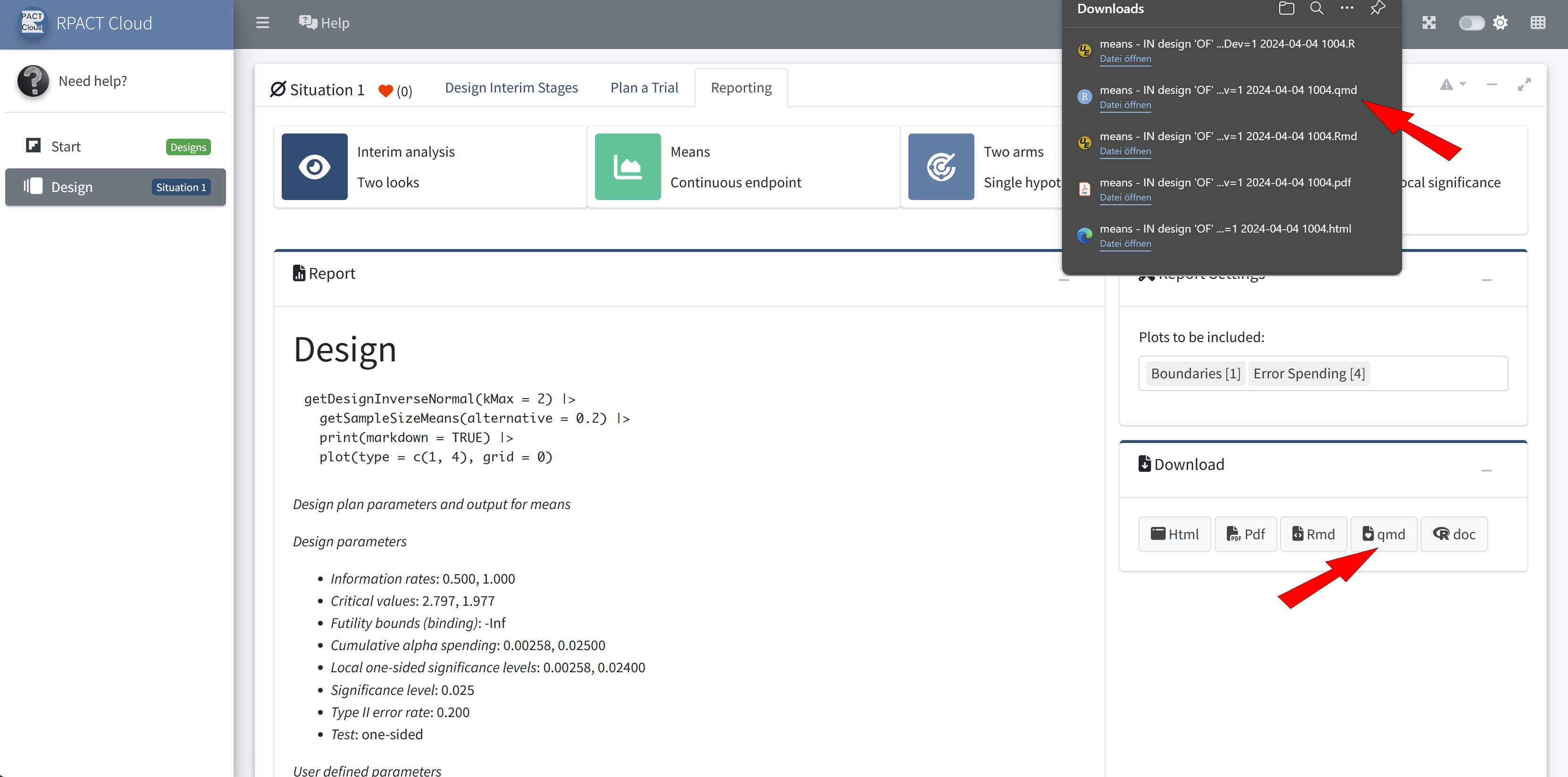
RPACT Cloud – Design

RPACT Cloud – Reporting
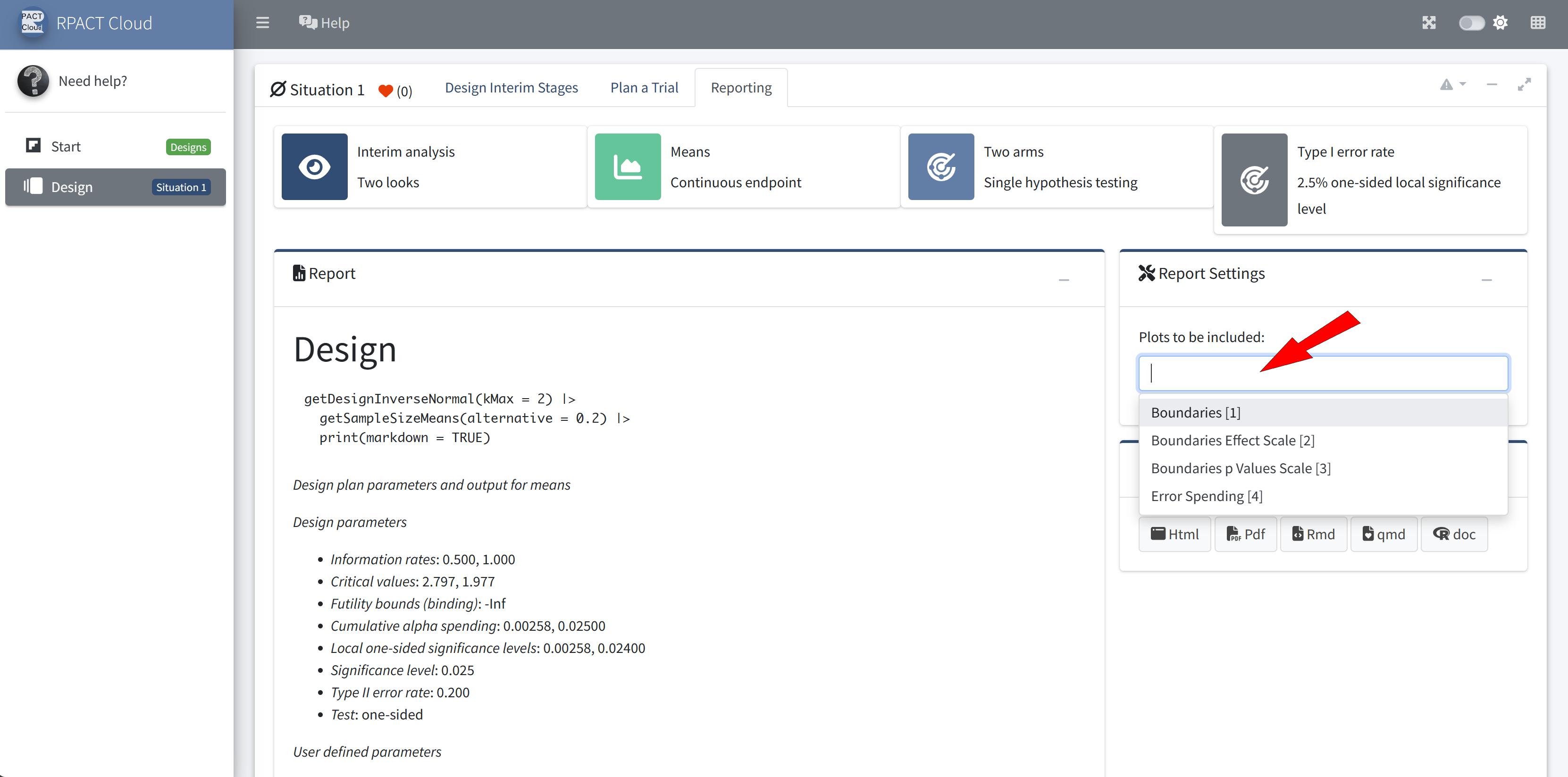
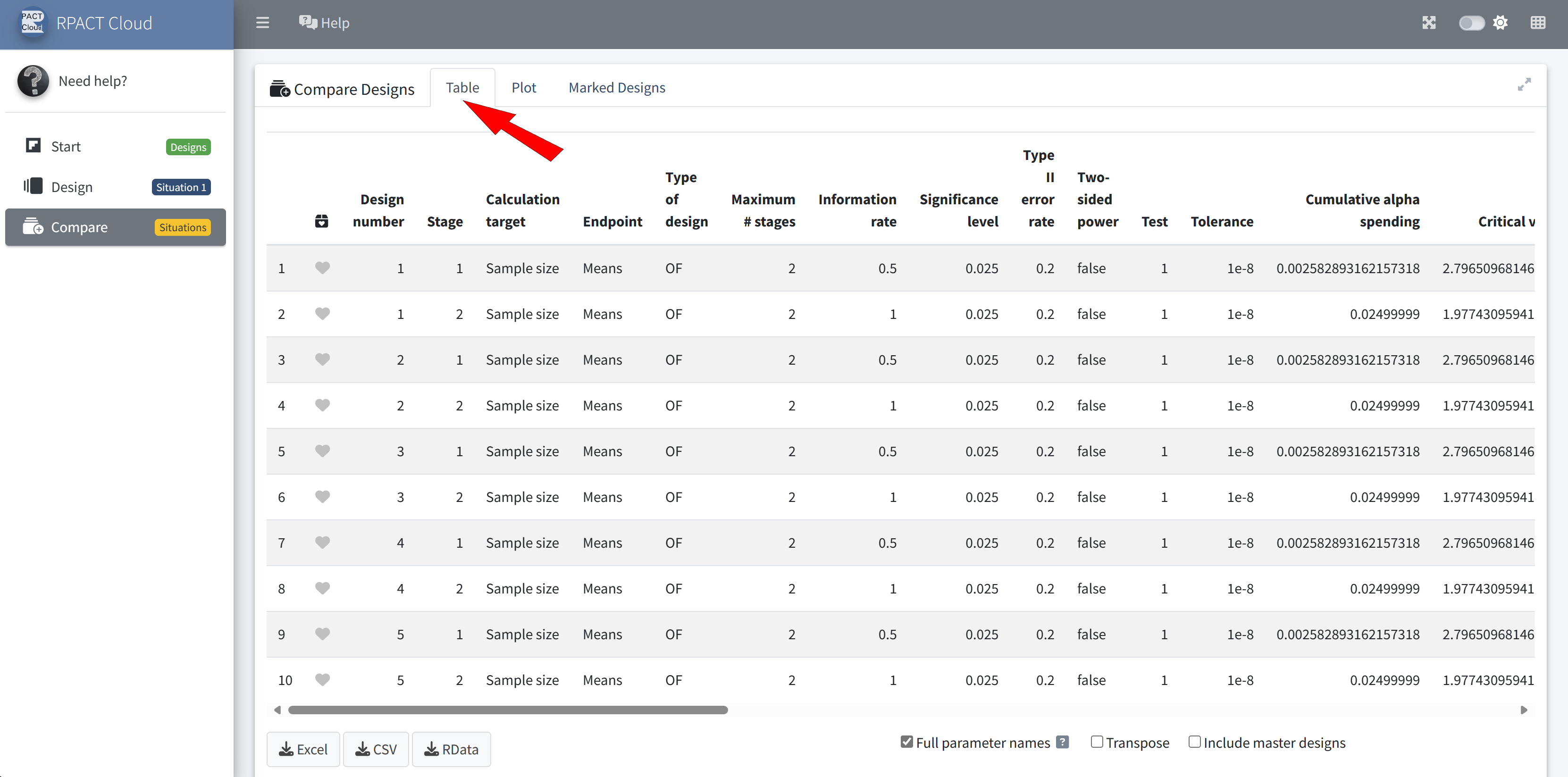
RPACT Cloud – Export
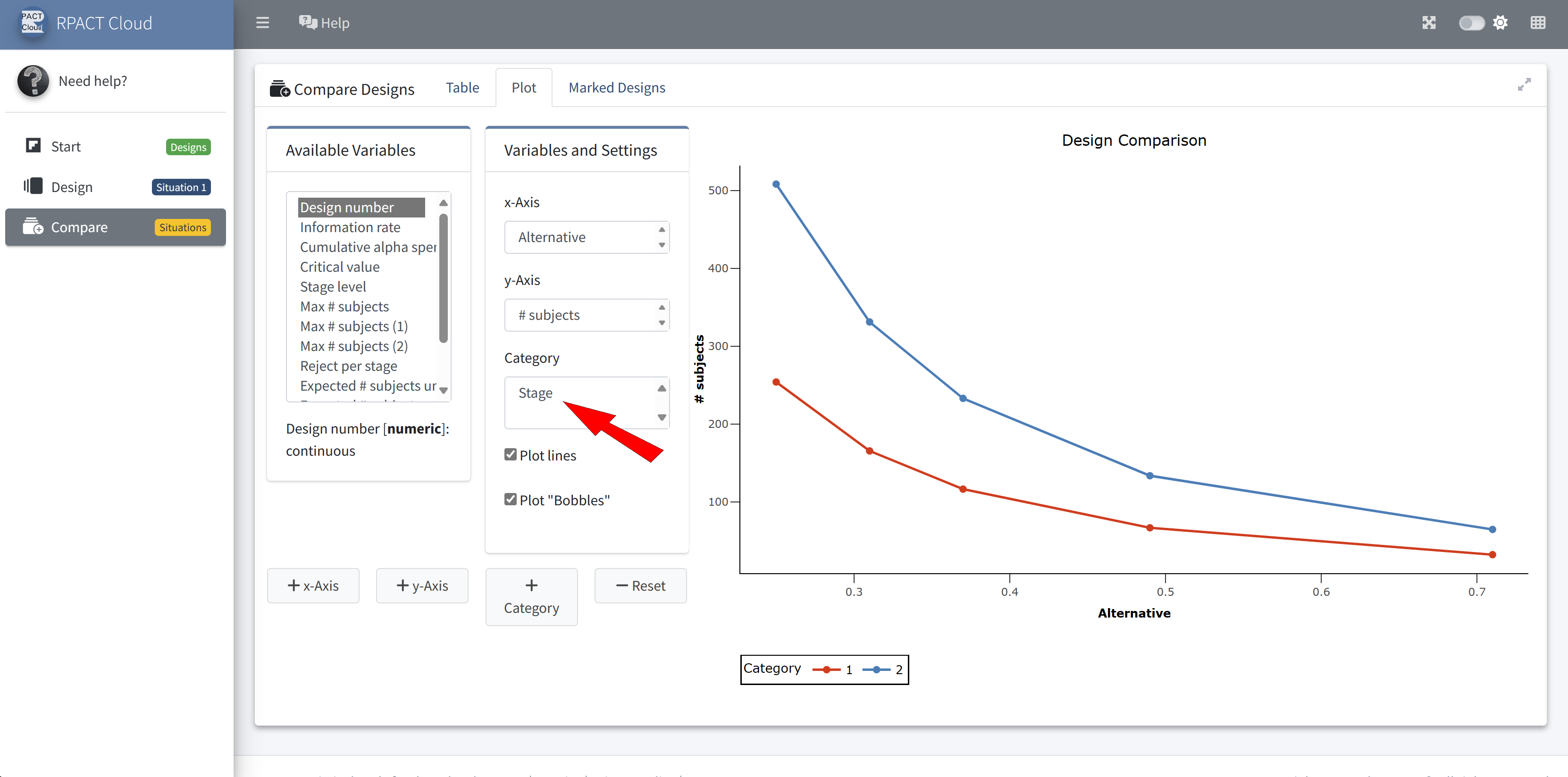
RPACT Cloud – Design Comparison

Package Validation Concept

Package Validation Concept

Why is rpact a reliable R package?

  • Formal validation inspired by “GAMP1 5” principles
  • testPackage()2: installation qualification on a client computer or company server
  • rpact 4.1.0: 36,943 unit tests (81% test coverage)
  • As few dependencies as possible:
    • Imports: Rcpp3
    • Suggests: testthat, ggplot2, R6
  • High test coverage4: Usage of covr and codecov.io

Package Validation Concept

Documentation structure inspired by GAMP 5

  1. User requirements specification (URS)
  2. Functional specification (FS)
  3. Software design specification (SDS)
  4. Verification
    • Test plan (TP)
    • Test protocol (TL)
  5. Appendix

Validation documentation of rpact 4.0.0:
7,470 pages - Customer specific version for each rpact release - Licensed for exclusive use by our customers

High User Acceptance

What Our Users Say About RPACT

  • “One of the best software and team in the field of adaptive design!”
    (Senior Director of Statistics)
  • “rpact is by far the easiest to use.”
    (Professor, Human-Technology Interaction Group)
  • “RPACT is just amazing.” (Biostatistician)
  • “We are impressed by the high quality of the package and the excellent support by rpact.” (Biostatistics director of a pharmaceutical company)
  • “[We] exclusively uses rpact, complemented with a huge internal webportal of supporting code, documentation, internal case studies, repository of health authority questions, etc. for all clinical trial design purposes” (see DOI)
  • “Excellent package! Many thanks.” (Biostatistician)

Why become a RPACT SLA customer?

  • Be part of the “RPACT User Group”
    \(\rightarrow\) yearly customer meetings
  • Get technical software support for written support requests1
  • Get one Allucent specific training per year
  • Get a Allucent specific software validation documentation for each rpact release on CRAN
  • Get access to the members area at www.rpact.com
  • Make an rpact installation qualification on each Allucent computer with your personal testPackage() token and secret
  • Determine the direction of rpact future development activities
  • Help to shape Open Source in Pharma2